Carpets in busy workplaces are exposed to far more use than those in quieter settings. Employees, customers, deliveries and equipment continually bring in soil, dust and moisture. Over time, this material becomes trapped within the carpet fibres and may no longer respond fully to routine vacuuming.
For businesses in Gillingham, Kent, regular commercial carpet cleaning provides a structured way to manage this build-up. It helps maintain a professional appearance, supports day-to-day cleaning and addresses heavily used areas before they become permanently worn or noticeably discoloured.
Maintaining Carpets in a Busy Commercial Environment
Commercial carpet cleaning is not simply a response to obvious stains. In high-traffic workplaces, it forms part of ongoing floor care by removing embedded material that gradually accumulates beneath the visible surface.
The most suitable cleaning schedule depends on the type of workplace, the carpet construction and the intensity of use. Entrances and corridors may require attention more frequently than private offices or lightly used rooms.
High Footfall Creates Embedded Soiling
Every person entering a workplace can carry small particles of soil and grit on their footwear. Entrance matting captures some of this material, but a proportion will still travel into the building.
Repeated foot traffic presses these particles deeper into the carpet. As the build-up increases, fibres may become dull, flattened and less responsive to ordinary vacuuming.
Professional cleaning loosens and extracts embedded material, helping the carpet regain a cleaner and more consistent appearance.
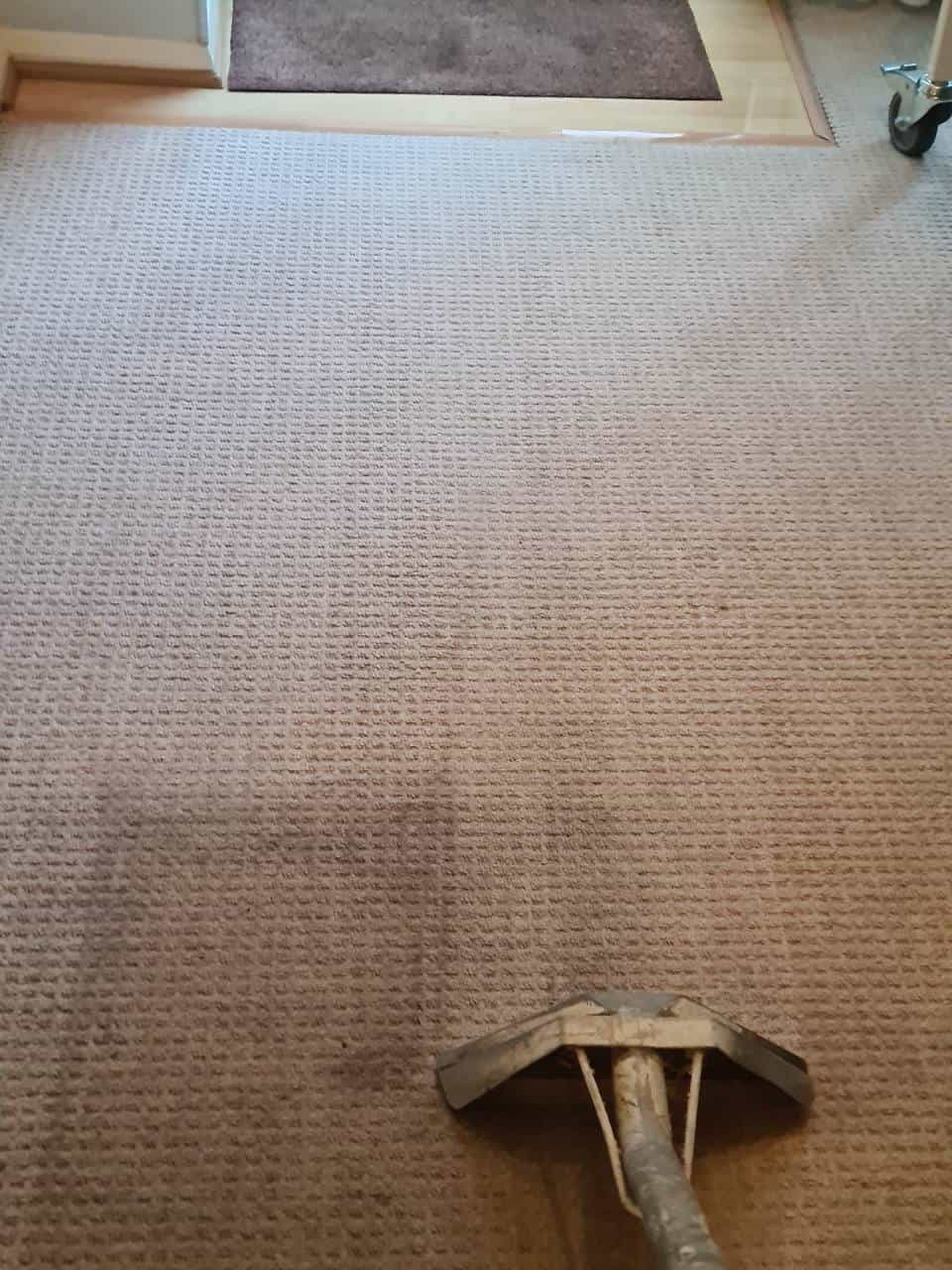
Busy Routes Can Develop Visible Traffic Lanes
Movement through a workplace usually follows predictable routes. Entrances, reception areas, corridors, stairways and paths between desks often receive much heavier use than surrounding sections.
These areas may gradually become darker or more compressed, creating visible traffic lanes. If cleaning is delayed until the contrast becomes pronounced, restoring an even appearance can be more difficult.
Regular treatment prevents heavily used routes from becoming significantly more soiled than the rest of the carpet.
Grit Can Contribute to Fibre Wear
Embedded grit does more than make a carpet look dirty. Hard particles can rub against the fibres whenever someone walks over them. This abrasive action may contribute to premature wear and a rough or faded appearance.
Professional cleaning cannot restore fibres that have been physically worn away. Removing abrasive material regularly can, however, help reduce one of the factors responsible for deterioration.
This distinction is important because some areas that appear dirty may actually be damaged. An experienced carpet cleaner can assess whether a section requires cleaning or whether permanent wear has already occurred.
Workplace Carpets Influence First Impressions
Flooring forms a large part of the visible environment. Even when desks, counters and furniture are tidy, marked or dull carpets can make the premises appear less well maintained.
Regular commercial cleaning helps reception areas, meeting rooms and customer-facing spaces remain presentable. It also supports a consistent standard across staff areas and shared facilities.
The aim is not to make the carpet look newly fitted after every clean. It is to prevent avoidable soiling from undermining the appearance of an otherwise professional workplace.
Spills and Residues Need Appropriate Treatment
High-traffic workplaces are more likely to experience drink spills, food marks, tracked-in moisture and accidental contamination. Some marks become increasingly noticeable because sticky residues attract additional dirt.
Repeated treatment with unsuitable products can spread a mark or leave a visible patch. Professional cleaners identify the carpet fibre and likely cause of the stain before choosing an appropriate method.
Although not every stain can be removed completely, prompt and informed treatment usually provides the best opportunity for improvement.
Regular Cleaning Supports Routine Maintenance
Vacuuming remains essential between professional treatments. It removes loose debris and prevents some particles from becoming deeply embedded.
However, routine maintenance can become less effective once substantial soil or residue has accumulated within the pile. A professional deep clean removes material that standard vacuuming leaves behind, allowing everyday cleaning to work more effectively afterwards.
A practical maintenance approach may include:
- entrance matting to reduce tracked-in dirt
- frequent vacuuming of busy areas
- prompt attention to spills
- periodic professional cleaning
- regular assessment of high-traffic routes
These measures work together to maintain the carpet rather than relying on a single occasional treatment.
Cleaning Can Be Prioritised According to Use
Not every part of a commercial property requires cleaning at the same frequency. A main entrance may become soiled much faster than a meeting room used only occasionally.
Professional assessment allows the workplace to be divided into different usage zones. Cleaning can then be prioritised according to footfall, visible condition and operational requirements.
This targeted approach helps prevent the busiest sections from deteriorating while avoiding unnecessary disruption in areas that remain in good condition.
The Correct Cleaning Method Matters
Commercial carpets vary in fibre type, backing, construction and previous treatment. The cleaning method should therefore be selected according to the individual flooring rather than applied automatically.
Before work begins, a professional cleaner should consider:
- carpet material and construction
- level and type of soiling
- location of stains
- intensity of foot traffic
- previous cleaning treatments
- practical drying requirements
Careful assessment helps achieve effective soil removal while protecting the carpet’s texture, colour and stability.
Signs That Commercial Cleaning Is Due
Businesses do not need to wait until the entire carpet looks dirty. Earlier indicators can include:
- darkening around entrances and doorways
- visible walking routes
- dull or uneven colouring
- flattened fibres that remain unchanged after vacuuming
- marks that repeatedly reappear
- stale odours
- reduced results from routine vacuuming
Recognising these signs early can help prevent localised soiling from becoming established across a wider area.
Conclusion
Regular commercial carpet cleaning is important for high-traffic workplaces because frequent use causes dirt, grit and residues to accumulate below the surface. Professional treatment can reduce visible traffic lanes, improve the carpet’s overall appearance and support more effective routine maintenance.
A planned approach also allows heavily used areas to receive attention according to their actual condition. This helps businesses maintain a cleaner and more consistent workplace without waiting for the carpet to appear heavily soiled.
If the carpets at your workplace in Gillingham, Kent, are affected by heavy foot traffic, K&S Carpet Cleaning Gillingham can assess their condition and recommend an appropriate cleaning approach. Contact our team to discuss your commercial carpet cleaning requirements.
Call us on: 01634 568 992
Click here to find out more about K&S Carpet Cleaning Gillingham
Click here to complete our contact form and see how we can help with your carpet needs.